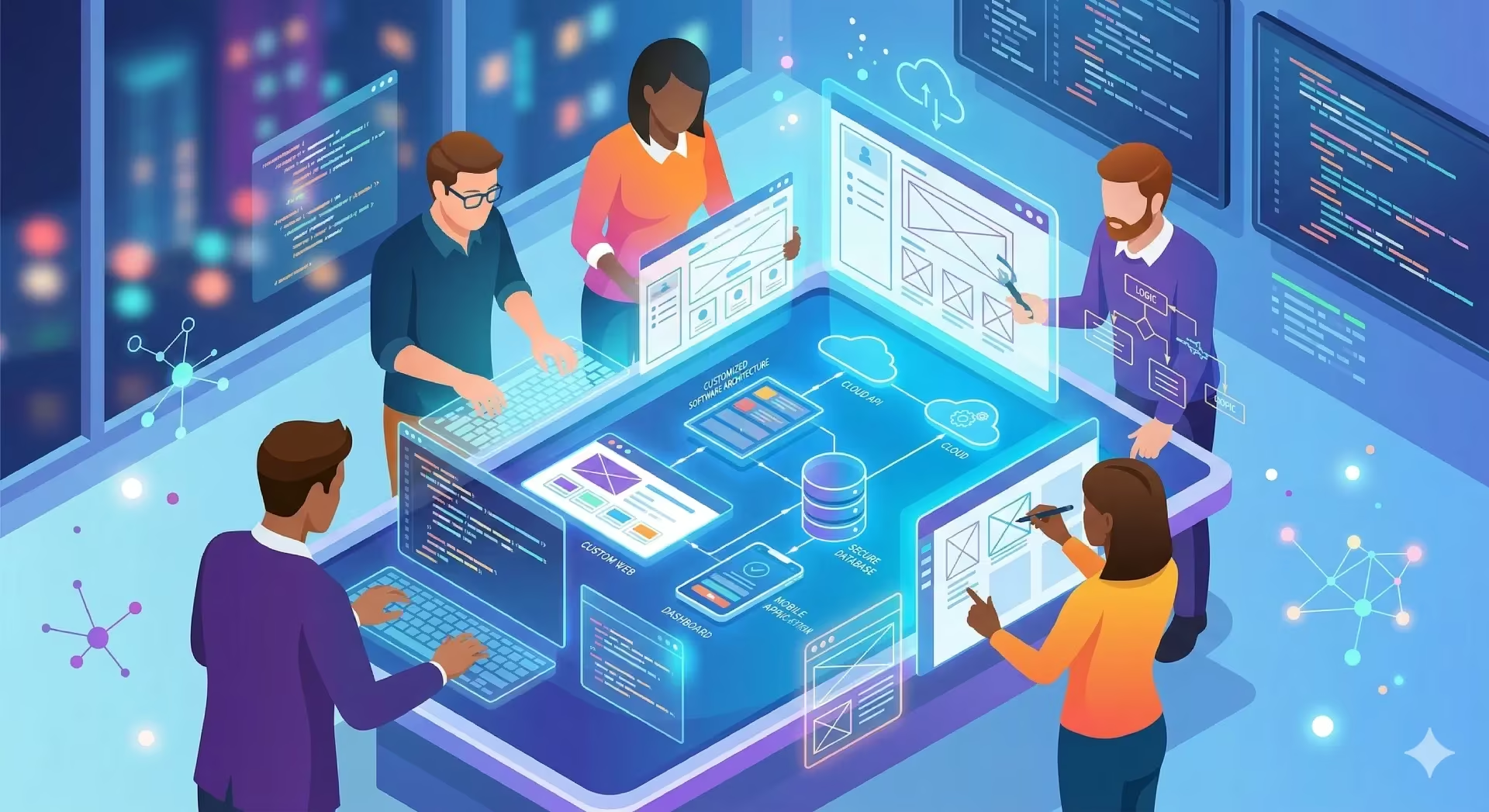
In today's fast-paced business world, software applications have become essential tools for success. While off-the-shelf software may seem like a quicker and easier option, it doesn't meet all the unique needs of businesses across various industries. Custom software development offers numerous benefits, including personalization, cost-effectiveness, high security and reliability, enhanced collaboration, and improved efficiency. In this article, we will explore the types of custom software systems and the benefits they offer to businesses.
Types of Custom Software Systems
Custom software systems are designed to meet the specific needs of a business. They can be broadly classified into the following categories:
Enterprise Resource Planning (ERP) Systems
ERP systems are designed to integrate all aspects of a business, including finance, human resources, supply chain management, and customer relationship management. They provide a centralized database that can be accessed by all departments, enabling efficient collaboration and information flow.
Customer Relationship Management (CRM) Systems
CRM systems are designed to manage customer interactions and relationships. They provide a centralized database of customer information, enabling businesses to track customer interactions, analyze customer behavior, and personalize customer experiences.
Supply Chain Management (SCM) Systems
SCM systems are designed to manage the flow of goods and services from suppliers to customers. They provide real-time visibility into inventory levels, order status, and delivery schedules, enabling businesses to optimize their supply chain operations.
Business Intelligence (BI) Systems
BI systems are designed to analyze and interpret business data, providing insights into business performance and trends. They enable businesses to make data-driven decisions, identify opportunities for growth, and optimize their operations.
Benefits of Custom Software Systems for Businesses
Custom software systems offer numerous benefits to businesses, including:
Personalization
Custom software systems are designed to meet the specific needs of a business, providing a tailor-made solution that perfectly suits the business's operations. This level of personalization enables businesses to optimize their operations, improve efficiency, and gain a competitive edge.
Cost-effectiveness
While opting for a tailor-made software solution may initially seem like an expensive investment, it has some substantial long-term cost benefits. Custom software systems are designed to be scalable, enabling businesses to add new features and functionalities as they grow. This eliminates the need for businesses to purchase new software as they expand, saving them money in the long run.
High Security and Reliability
Custom software systems are designed with specific security measures to protect sensitive information and data. This level of security is not available in off-the-shelf software solutions, which are vulnerable to cyber-attacks and data breaches. Custom software systems are also more reliable than off-the-shelf solutions, as they are designed to meet the specific needs of a business.
Enhanced Collaboration
Custom software systems provide a centralized database that can be accessed by all departments, enabling efficient collaboration and information flow. This level of collaboration improves communication, enhances teamwork, and streamlines business operations.
Improved Efficiency
Custom software systems are designed to automate tasks, streamline processes, and improve data management. This level of automation and streamlining saves time and money in the long run, enabling businesses to focus on their core competencies and achieve their goals.
Competitive Edge
Custom software systems can be designed to include unique features and functionality not available in off-the-shelf software solutions. This level of customization gives businesses a competitive edge by providing customers with a superior user experience.
Scalability
Custom software systems are designed to be scalable, enabling businesses to add new features and functionalities as they grow. This level of scalability allows businesses to adapt and grow with the market, ensuring their long-term success.